
Buffet Versus Plated Catering for Your Event

A dinner service can quietly shape the entire mood of an event. Buffet versus plated catering is not simply a question of how food reaches the table. It affects the pace of the evening, the way guests interact, the staffing plan, the presentation, and the amount of structure a host wants around the meal.
For an estate celebration, wedding reception, corporate dinner, or waterfront gathering, both formats can feel polished and generous when planned well. The best choice comes from understanding what each service style asks of the venue, the guest list, and the event schedule.
Buffet Versus Plated Catering: The Essential Difference
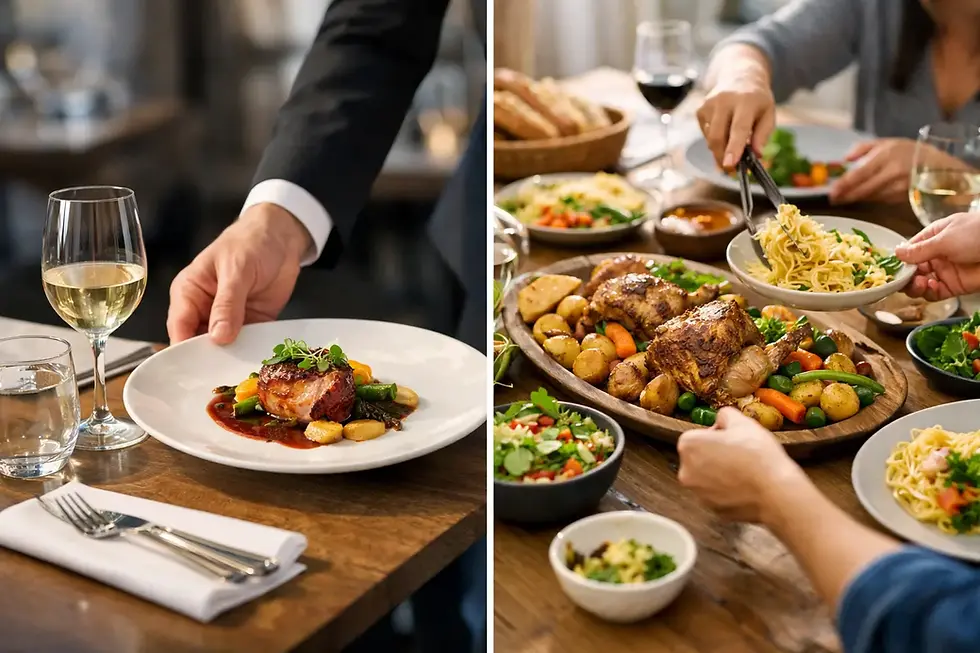
A plated meal is served course by course to seated guests. Each plate is assembled with a specific composition and delivered by a trained service team, usually after guests have selected an entrée in advance. The experience is paced, composed, and especially well suited to events where the meal is intended to be a central moment.
A buffet presents a curated selection of dishes at staffed stations or a thoughtfully designed serving display. Guests select their own portions and move through the meal at a more personal pace. A buffet can still be highly refined, with chef-attended carving stations, composed salads, hot chafing presentations, and carefully selected accompaniments. It is not inherently casual. Its character depends on the menu, display, service staff, and execution.
The decision is less about formality versus informality than it is about control versus flexibility. Plated dining offers a more directed guest experience. A buffet allows more choice and movement.
When Plated Dining Is the Better Fit
Plated service is often the natural choice for a formal wedding, a seated gala, an executive dinner, or an intimate private event where hosts want each guest to receive the same composed culinary experience. The room remains settled during dinner, allowing toasts, speeches, and entertainment to follow a clear timeline.
Fine-dining precision is particularly visible in plated service. Temperature, portioning, garnish, and plate composition are all managed deliberately. Chef Deanna Corso's nearly two decades of experience at The Boca Raton inform the kind of disciplined timing this format requires: the kitchen, servers, and event captain must work in close coordination so a full dining room is served with consistency.
This format also supports a more elegant visual environment. Guests are not standing in line or carrying plates back from a display, and tables can remain the focus of the room design. For hosts who have invested in florals, linens, place settings, and a carefully arranged seating plan, plated service preserves that sense of occasion.
There are practical advantages as well. With advance entrée selections, a caterer can plan accurately for dietary requirements, including vegetarian, vegan, gluten-free, and allergy-conscious meals. The service team knows where each special plate belongs, which can provide welcome reassurance for guests with specific needs.
Plated dining does require commitment to a schedule. Guests need to be seated at approximately the same time, and late arrivals can disrupt the service rhythm. It also requires sufficient service staff, adequate staging space for plate-up, and a venue layout that allows servers to move comfortably between tables. At a private residence, this may mean using a tented prep area, arranging rentals strategically, or adapting the kitchen plan well before event day.
Where a Curated Buffet Excels
Buffets are exceptionally effective when the guest experience should feel social, relaxed, and adaptable. They work beautifully for milestone birthdays, wedding welcome parties, showers, holiday gatherings, corporate luncheons, and events with varied arrival times or a looser program.
The primary advantage is choice. A guest who prefers seafood can enjoy it alongside a vegetarian seasonal entrée, while another can build a plate around a carved protein and chef-selected sides. This is useful for groups with broad tastes, mixed ages, and a range of dietary preferences. Rather than asking every guest to decide weeks in advance, the menu can accommodate them in the moment.
A buffet also encourages conversation. Guests circulate, encounter one another at stations, and return to their tables without the fixed cadence of a multi-course dinner. For an outdoor Palm Beach gathering, that movement can feel especially natural, provided the display is placed thoughtfully and protected from heat, wind, and direct sun.
The strongest buffet layouts avoid a single long line. Separate stations, duplicated popular dishes, and staff who guide and serve guests keep the flow comfortable. A chef-attended carving station or pasta station can add theater, while passed hors d'oeuvres before dinner prevent guests from arriving at the buffet overly hungry.
Buffets require attention to visual maintenance. Food must remain abundant-looking, properly heated or chilled, and refreshed throughout service. Serving pieces, signage, utensils, and linens matter. A refined buffet is managed continuously, not set out and left unattended.
Consider Guest Count, Venue, and Event Flow
Guest count alone does not determine the right format, but it changes the operational equation. A plated dinner for 40 guests can be intimate and highly tailored. A plated dinner for 180 guests can be equally elegant, but it requires a substantial service and culinary plan. Buffets may serve larger groups efficiently, particularly when the event has multiple food stations, though a single buffet line can create delays at almost any size.
Venue logistics deserve an early conversation. A ballroom or country club may offer a built-in banquet kitchen and established service pathways. A private estate may require more advance planning around power, water, refrigeration, prep space, parking, and access for rentals. Waterfront locations introduce additional considerations, including weather contingencies and the stable placement of food displays.
The schedule should lead the decision. If dinner follows a ceremony, cocktail hour, and speeches, plated service can bring welcome order to the evening. If guests will be arriving gradually for a business reception or open-house-style celebration, a buffet or stations format is often more gracious. No guest wants to miss dinner because they were delayed in conversation or traffic.
Budget Is About More Than the Menu Price
It is reasonable to expect plated dining to carry higher labor costs. Each course must be plated, carried, and cleared, and service staff are essential to the experience. A buffet can reduce some per-guest service labor, but premium buffet service still involves culinary staff, attendants, equipment, display elements, and replenishment throughout the meal.
The more useful budget question is where service has the greatest value for your event. If a formal seated dinner is central to the celebration, investing in the staffing and timing required for plated service may be well justified. If you want to offer several entrée options, more generous variety, and a longer period of guest interaction, a curated buffet may deliver more of what matters to you.
Avoid comparing formats only by a single per-person figure. Ask what is included: staffing, rentals, china, glassware, linens, bar service, menu accommodations, stations, setup, breakdown, and kitchen support. A clear proposal should show how the culinary experience and operational needs work together.
A Hybrid Approach Can Offer the Best of Both
Some of the most successful events use both styles with purpose. Passed hors d'oeuvres followed by a plated first course and buffet-style entrée stations can feel generous without losing structure. A plated dinner may be followed by a dessert display, allowing guests to move and mingle after formal service. For a luncheon, individually plated salads paired with a composed buffet of warm entrées can provide both elegance and choice.
A hybrid format is especially helpful when guests have diverse preferences but the host still wants a clear moment for speeches or toasts. It requires thoughtful timing, but it can make the meal feel less rigid while maintaining a refined standard.
Questions to Settle Before You Choose
Before finalizing the service style, consider how long you want dinner to last, whether guests will be assigned seats, how many dietary needs are expected, and whether the venue has a functional kitchen or requires a full off-site setup. Think honestly about the atmosphere you want: a room that settles into a shared dining experience, or one that stays lively and conversational.
Also consider the people at the center of the event. For a wedding couple, plated service may create a welcome pause after a busy ceremony. For a family hosting an anniversary at home, a well-staffed buffet may allow them to spend more time moving among guests. For a corporate host, the right answer may depend on whether the goal is networking, presentations, or appreciation.
The right format should make your guests feel cared for, not managed. If you are weighing buffet versus plated catering for an upcoming Palm Beach or Broward County event, Simply Foods can help you assess the menu, venue logistics, and service rhythm so the meal feels as considered as the occasion itself.


Comments