
Chef Curated Buffet Options for Elevated Events

A buffet should never feel like an interruption in an otherwise beautiful event. At a waterfront wedding, estate reception, or executive luncheon, guests notice when a serving line slows the room, dishes lose their finish, or the menu feels disconnected from the occasion. Well-planned chef curated buffet options solve those concerns by pairing generous choice with the same standards of timing, temperature, and presentation expected from a refined meal.
The difference is not simply a more elaborate menu. It is the culinary and operational thought behind it: what guests see first, how they move through the room, which dishes hold beautifully, and where a chef's attention makes the experience feel intentional rather than self-serve.
What Makes a Buffet Chef Curated?
A chef-curated buffet begins with the event itself, not a preset list of entrées. The guest profile, time of day, venue, season, service style, and overall atmosphere all influence the menu. A corporate luncheon calls for a different rhythm than a black-tie wedding, just as a casual family celebration at home has different needs than a formal reception at a private club.
Chef Deanna Corso's nearly two decades of experience at The Boca Raton inform this approach. Resort-level catering teaches an essential lesson: abundance alone does not create luxury. The guest experience depends on restraint, balance, and exacting execution. A buffet should offer enough variety for guests to feel considered, without becoming so broad that quality, replenishment, and visual clarity suffer.
This may mean a composed seasonal salad with a bright vinaigrette, a carefully selected seafood or passed starter, two complementary main courses, thoughtfully prepared sides, and a dessert presentation that feels complete without competing with the rest of the meal. The ingredients should have a purpose, and each dish should belong with the others.
Choosing Chef Curated Buffet Options by Occasion
The strongest buffet format is shaped by how people will gather, not by a single definition of formality. A wedding often benefits from a menu that accommodates a broad range of tastes while preserving a polished, celebratory feel. Pairings such as a carved protein with a composed seafood entrée or an elegant vegetarian main give guests meaningful choice without creating a crowded line.
For a corporate event, the priorities often shift toward pace and ease. Guests may have a limited lunch window, scheduled presentations, or colleagues arriving at different times. In this setting, a buffet should be easy to navigate and satisfying without being overly heavy. Lighter seasonal preparations, clearly labeled dietary accommodations, and a sensible service sequence help the meal support the purpose of the day.
At private estate gatherings, the menu can be more personal. Hosts may want to feature favorite ingredients, honor family traditions, or reflect the setting through local seafood, garden-forward dishes, or a refined coastal style. This is where customized chef-curated buffet options are particularly valuable: the menu can feel generous and relaxed while still carrying a distinct point of view.
Memorial receptions require another level of consideration. The food should be comforting, polished, and easy for guests to enjoy while visiting with family. Service must be discreet, and the menu should provide reassurance rather than demand attention. A professional caterer will account for the emotional tone of the gathering alongside timing, guest flow, and practical venue needs.
Menu Variety Without Losing Focus
Hosts often ask how much choice is enough. The honest answer is that it depends on guest count, the length of the event, and whether the buffet is the central meal or one component of a larger reception. More options can be useful, especially for diverse groups, but every additional selection introduces considerations around staffing, equipment, space, and consistency.
A focused menu is usually the more elegant choice. Two mains are often more successful than four, provided they are distinct and thoughtfully selected. For example, a richer carved entrée may pair well with a lighter fish preparation or a satisfying vegetarian option. Side dishes should complement both mains, rather than read as unrelated additions.
Dietary needs deserve planning early, not as a last-minute label placed beside the buffet. Vegetarian, vegan, gluten-conscious, and allergy-sensitive guests should have options that feel like part of the menu rather than an afterthought. There is an important distinction between accommodating a restriction and creating a dish that is genuinely appealing. A skilled chef considers flavor, texture, and presentation for every guest.
Consider the Season and the Setting
Seasonality contributes to both flavor and event design. In Palm Beach and Broward County, warm-weather celebrations may call for crisp salads, vibrant vegetables, citrus, herbs, and well-chilled seafood presentations. Cooler evenings or holiday gatherings can support deeper sauces, roasted preparations, and more substantial accompaniments.
The venue matters just as much. An outdoor reception needs a menu and setup designed for heat, wind, and changing light. A historic home may have limited kitchen access. A ballroom may offer more room for dramatic presentation but require careful coordination with venue teams, rentals, and the event timeline. These are not details to solve after the menu is selected. They should inform the menu from the beginning.
Buffet Presentation Is Part of the Meal
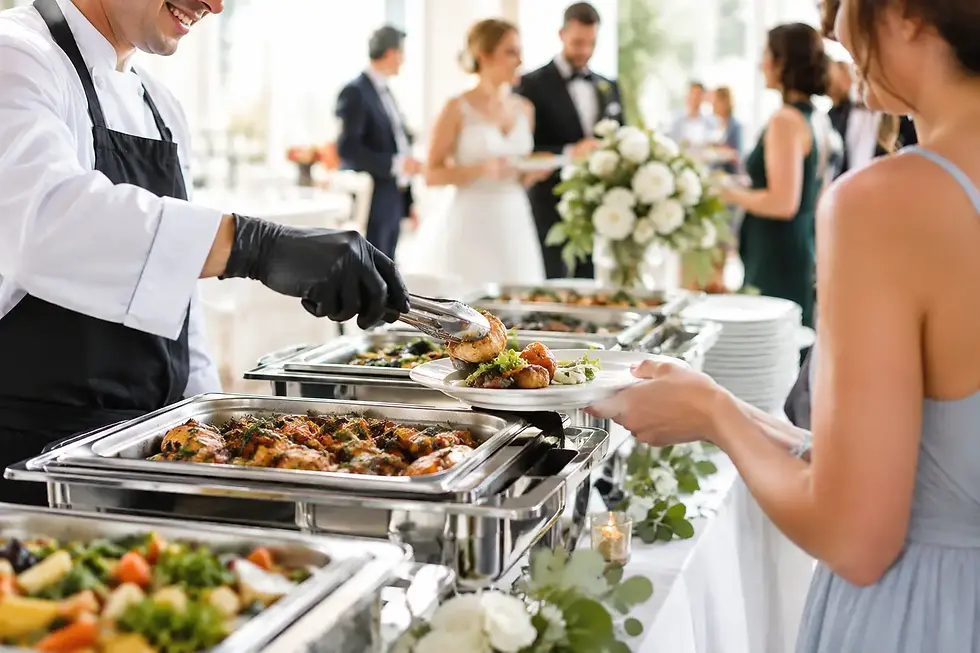
Guests begin forming an impression before they take a bite. The height of platters, placement of serving vessels, floral or greenery accents, linens, signage, and the spacing between stations all influence how a buffet feels. The goal is not excess decoration. It is a composed presentation that matches the room and makes service intuitive.
For larger events, separate stations can improve flow more effectively than one long buffet. A salad or starter display can welcome guests, while main courses are arranged at a second location and desserts appear later in the event. This creates movement without a visible bottleneck and gives the reception a more relaxed cadence.
At smaller events, one beautifully arranged buffet can be ideal. In that setting, the focus is often on proportion and replenishment. Serving pieces should not look oversized for the guest count, and food should be refreshed in a way that maintains an inviting appearance throughout service.
The Operational Details Guests Feel but Rarely See
A refined buffet is supported by work that happens well before guests arrive. Caterers must assess kitchen access, power availability, load-in routes, parking, table placement, rentals, staffing, and the timeline for hot and cold food. At a private home, these details can be more complex than at a traditional venue, particularly when the event takes place outdoors or across multiple entertaining areas.
Temperature management is especially important. A chef may design a dish differently for a buffet than for plated service because it must remain at its best during the service window. Some foods are exceptional when served immediately but do not hold well. Others can be prepared and maintained beautifully with the proper equipment and attention. That knowledge protects both food quality and guest confidence.
Staffing also changes the experience. Attended stations and service staff can guide guests, maintain a clean presentation, answer basic menu questions, and keep the event moving gracefully. For an intimate luncheon, premium drop-off catering may be the appropriate choice. For a wedding or milestone celebration, full-service staffing often provides the calm, polished rhythm hosts want.
Questions to Settle Before Finalizing the Menu
Before approving a buffet, confirm the guest count range, event duration, dietary needs, and venue limitations. Discuss when guests will eat, whether cocktails or passed hors d'oeuvres precede dinner, and whether there will be speeches or entertainment that affect service timing. A menu is only as successful as the schedule surrounding it.
It is also wise to discuss rentals and tabletop presentation early. The right china, flatware, serving pieces, and linens can support the culinary style, while the wrong selections can make even excellent food feel out of place. If a planner is involved, the caterer should coordinate closely with them. If you need planning support, an experienced catering team can often recommend a qualified event planner suited to the scope of the celebration.
A buffet can be generous without being ordinary. When the menu, setting, presentation, and service are planned as one experience, guests are free to enjoy the occasion rather than navigate the meal. For hosts planning an elevated gathering, Simply Foods can help shape a chef-led buffet that feels appropriate to the event and effortless to the people attending it.


Comments