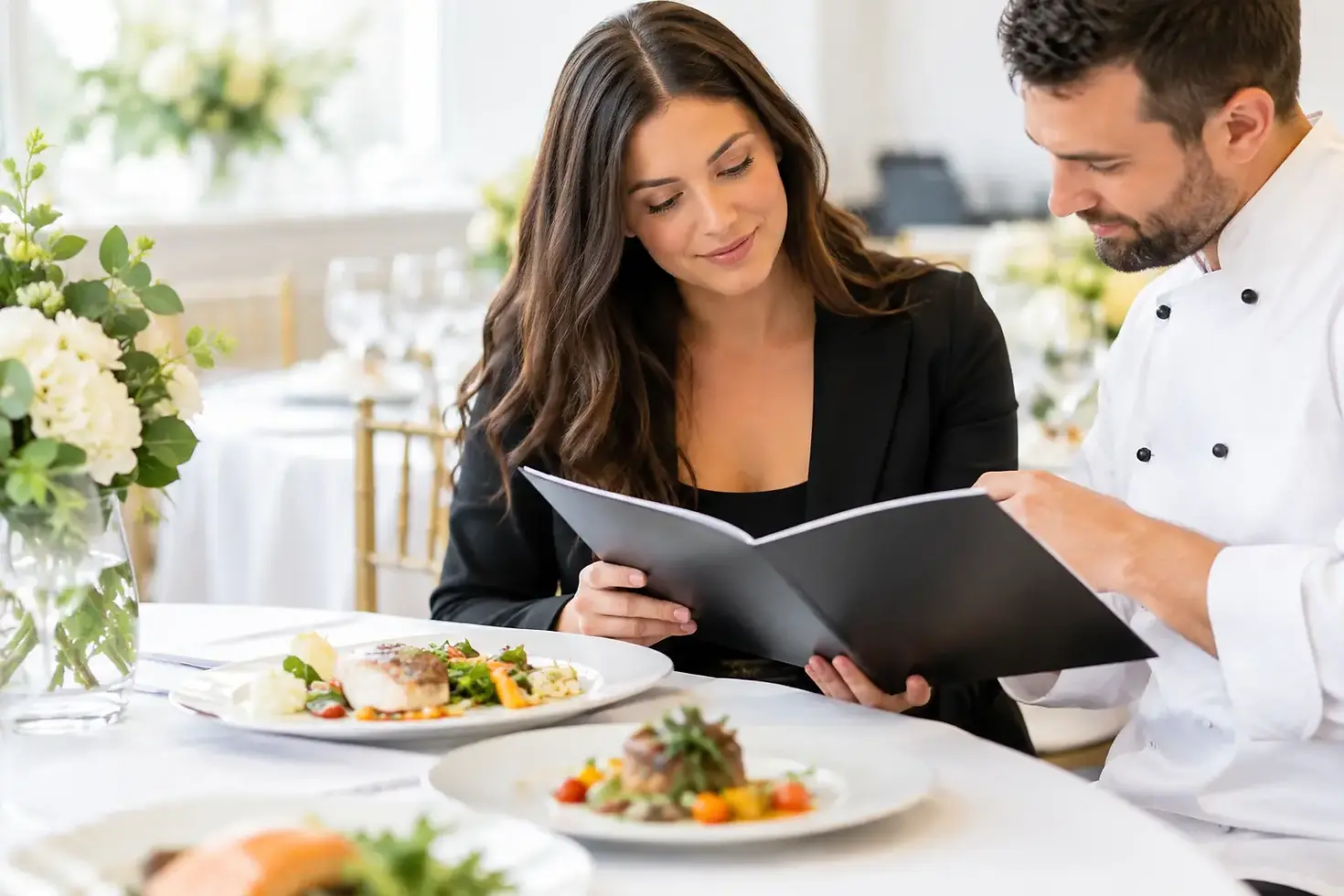
How to Choose the Best Menu for Private Events

The best menu for private events is rarely the longest, most elaborate, or most expensive option on paper. It is the menu that feels right for the setting, supports the rhythm of the gathering, and allows every guest to feel considered. A waterfront cocktail reception calls for a different culinary approach than a seated estate dinner, a corporate luncheon, or an intimate family celebration.
The most successful menus begin with the experience you want guests to have. Will they arrive dressed for a formal evening and settle into a multi-course dinner? Will they circulate through a home, enjoying conversation and passed hors d'oeuvres? Are you hosting colleagues with a limited lunch window? Once those decisions are clear, the food becomes more focused, more beautiful, and more enjoyable to serve.
The Best Menu for Private Events Starts With Event Flow
Before selecting dishes, consider how your guests will move through the occasion. Food has a practical role beyond flavor: it sets the pace, gives guests a reason to gather, and shapes the energy in the room.
For a reception-style event, guests need food that can be enjoyed comfortably while standing, holding a beverage, and greeting others. Passed canapés, composed small plates, raw bar presentations, and chef-attended stations create variety without interrupting conversation. The strongest reception menus include a balance of familiar flavors and more distinctive elements, so guests can choose what feels comfortable while still discovering something memorable.
A seated dinner creates a more deliberate experience. Courses should build naturally, beginning with a light first course and moving toward a composed entrée with appropriate accompaniments. The menu should feel generous but not overly heavy, especially in South Florida, where outdoor arrivals, warm weather, and evening events often call for brighter flavors and measured richness.
Match the Service Style to the Occasion
A plated dinner is often the right choice when formality, timing, and presentation matter most. It gives the host a refined, restaurant-style progression and allows the culinary team to present each course with precision. It also works especially well for milestone celebrations, private estate dinners, and weddings with a defined program of toasts and speeches.
A curated buffet can be equally elegant when it is designed thoughtfully. It is particularly effective for guests who value choice, families spanning several age groups, and events where people will dine over a longer period. The key is not simply placing many dishes on a table. A polished buffet requires considered portioning, attractive serviceware, appropriate replenishment, and a layout that prevents long lines.
Family-style service offers a warm middle ground. Shared platters create an abundant, generous table while preserving the structure of a seated meal. It works beautifully for intimate celebrations, but it requires sufficient table space and guests who are comfortable sharing dishes.
Build a Menu With Contrast, Not Excess
An elevated menu benefits from contrast in temperature, texture, color, and flavor. If the first passed bite is crisp and bright, the next might be warm and savory. If an entrée features a rich sauce, the side dishes should bring freshness or acidity. This is the type of balance that makes a menu feel composed rather than repetitive.
A practical private-event menu usually has a clear culinary point of view without becoming so narrow that guests have difficulty finding something to enjoy. A coastal menu might feature chilled seafood, citrus, seasonal vegetables, and a polished fish entrée, supported by a thoughtful alternative such as herb-roasted chicken or tender beef. For a more traditional celebration, the menu may lean into classic preparations refined through excellent ingredients and careful presentation.
Chef Deanna Corso's nearly two decades at The Boca Raton inform an especially useful principle for private entertaining: luxury is often felt in the restraint and execution. Guests remember a perfectly cooked entrée, a vibrant salad, gracious service, and food that arrives at the proper temperature. Adding more components does not always improve the experience.
When choosing courses, ask whether each dish has a purpose. A cocktail-hour selection should welcome guests without filling them before dinner. A first course should prepare the palate rather than compete with the entrée. Dessert should feel like a finish, not an obligation after an overly heavy meal.
Plan for Dietary Needs Without Creating a Separate Event
Dietary accommodations should be discussed early, particularly for formal dinners where place settings and course counts are planned in advance. Vegetarian, vegan, gluten-free, dairy-free, and allergy-sensitive guests deserve dishes that feel intentional, not an afterthought prepared from whatever is available.
The most graceful approach is to build flexibility into the main menu. For example, seasonal vegetables, composed salads, and naturally gluten-free sides can be enjoyed by many guests without being labeled as special accommodations. Then, where an individual entrée is required, it can be plated with the same visual care and culinary attention as every other course.
Allergies require more than a menu note. Your caterer should know the nature of the allergy, whether cross-contact is a concern, and how the guest's meal will be identified and delivered. Hosts should also provide the final dietary count before purchasing and production are underway. Last-minute changes can often be managed, but advance communication gives the kitchen the best opportunity to serve each guest well.
Consider the Venue Before Finalizing the Menu
A beautiful menu must also be realistic for the venue. Private homes, waterfront properties, clubs, and event spaces each present different considerations around kitchen access, electrical capacity, loading, parking, prep space, and service routes.
At a private residence, a menu may need to be finished in a temporary kitchen or transported in stages from a mobile production setup. Delicate fried items, for example, may be better as a chef-attended course than as a plated appetizer held for an extended period. At an outdoor event, wind, humidity, and sun exposure affect everything from buttercream desserts to raw bar service and linen presentation.
Discuss rentals and service equipment as part of the menu conversation. The right plate, flatware, glassware, and buffet vessels support the food and the atmosphere. They also influence staffing needs, table spacing, and the timing of the event. An experienced caterer will ask these questions before making promises about a menu format.
Use Seasonality to Keep the Menu Fresh
Seasonality brings both flavor and visual interest. In Palm Beach and Broward Counties, citrus, tropical fruit, fresh herbs, local seafood availability, and warm-weather produce can inspire menus that feel appropriate to the setting without becoming predictable.
That does not mean every event needs a regional theme. A classic French-inspired dinner, Italian-inspired luncheon, or contemporary American menu can all work beautifully. The question is whether the ingredients and service style suit the time of year, venue, and guest expectations. A rich braise may be welcome at a winter estate dinner, while a summer luncheon may call for lighter proteins, crisp salads, and fruit-forward desserts.
Give the Menu Enough Time to Take Shape
Menu planning is most productive when it begins alongside guest-count and venue discussions, not after invitations are already out. Early planning allows room to consider service style, rentals, beverage pairing, timeline, and dietary needs together.
As the event approaches, refine rather than reinvent. Confirm the guest count, identify dietary accommodations, review the floor plan, and make sure the menu still suits the schedule. If there will be a ceremony, speeches, or a waterfront sunset moment, dinner service should support those priorities instead of competing with them.
For hosts who want guidance from the first conversation through service, Simply Foods can help shape a chef-led menu around the occasion, venue, and guests. A thoughtful planning discussion is often the clearest path to food that feels as effortless as the event itself.


Comments