Private Dinner Party Chef Catering Guide

A private dinner party chef catering experience works best when it feels effortless to your guests and well considered behind the scenes. That usually means more than a beautiful menu. It means pacing, kitchen logistics, service style, staffing, rentals, dietary planning, and a host who is free to enjoy the evening instead of managing it.
For intimate gatherings, that difference matters. A dinner for 10 or 20 is small enough that every detail is visible, but significant enough that any weak point stands out quickly. The right catering approach should feel tailored to your home, your guest list, and the atmosphere you want to create.
What private dinner party chef catering really includes
Many hosts assume chef catering simply means someone arrives and cooks. In practice, a refined dinner service is a coordinated hospitality experience. Menu planning is only the beginning. The event also requires a realistic prep timeline, a service plan that fits the flow of the evening, and thoughtful coordination around your space.
For some dinners, that means a multi-course plated meal prepared on-site with servers, rentals, and wine service. For others, it may mean a beautifully composed family-style dinner with a chef-led finish in the kitchen and discreet staff support throughout the night. The right format depends on the guest count, the home, and how formal or relaxed you want the evening to feel.
This is where experience matters. Chef-led catering tends to produce a better result because the menu is designed around actual execution, not just appealing descriptions on paper. A dish may sound wonderful, but if it cannot be finished properly in a residential kitchen or held at its ideal temperature during service, it needs to be adjusted.
Choosing the right format for your dinner
The most successful private dinners begin with a clear sense of mood. Are you hosting a formal seated celebration, a rehearsal dinner at home, an anniversary meal for close friends, or an elegant waterfront evening with a more social pace? Each calls for a different service style.
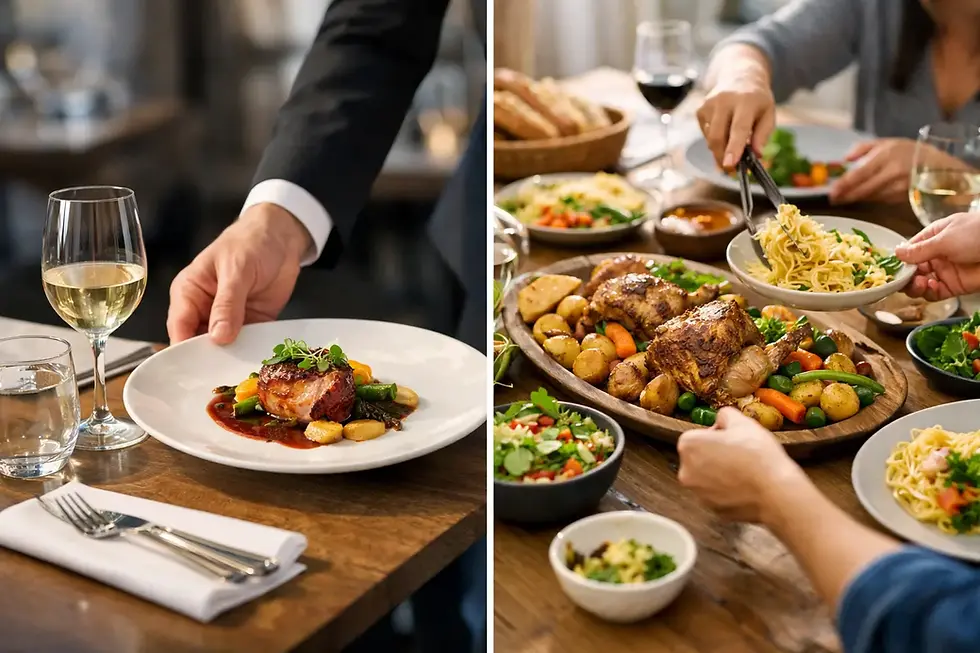
Plated service for a refined, restaurant-style evening
Plated dinners are ideal when you want structure, polish, and a fine-dining rhythm. Courses arrive with intention, portions are consistent, and the guest experience feels elevated from the first course through dessert. This format works especially well for milestone birthdays, engagement celebrations, and intimate corporate dinners where presentation matters.
The trade-off is that plated service typically requires more staffing, more rentals, and a kitchen setup that can support course timing. In a private home, that should be assessed early rather than assumed.
Family-style service for warmth with elegance
Family-style service offers a more relaxed tone while still feeling beautifully hosted. Shared platters encourage conversation and give the table a generous, abundant look. This works especially well for homes where guests know each other well and the host wants the evening to feel welcoming rather than highly formal.
That said, family-style service still needs planning. Table size, platter placement, and menu composition become more important, especially when dealing with sauces, proteins, and side dishes that need to stay attractive throughout the meal.
Chef-attended stations or coursed small plates
For some homes and guest lists, a traditional sit-down dinner is not the best fit. Guests may prefer to mingle, move between indoor and outdoor spaces, or enjoy a longer evening with a more fluid pace. In those cases, chef-attended stations or a sequence of composed small plates can create a dinner party atmosphere that feels social without becoming casual.
Menu design matters more than most hosts expect
A strong private dinner menu should reflect the season, the setting, and the capabilities of the venue. It should also account for the pace of service. Rich dishes in every course can make a dinner feel heavy. Too many delicate components can slow execution. The best menus build balance into the evening.
At this level, ingredient quality is assumed. What separates a polished event is how the meal progresses. A first course should awaken the palate without overwhelming it. The entrée should feel substantial but not cumbersome. Dessert should finish the evening elegantly, not simply add sweetness because it is expected.
Chef Deanna Corso's nearly two decades at The Boca Raton are especially relevant in this kind of planning. Resort-level culinary experience teaches timing, consistency, and how to serve refined food outside a fixed restaurant environment. Those skills matter in private homes, where kitchen layouts vary and every event requires adaptation.
Dietary needs should be handled early and discreetly. A well-planned dinner can accommodate gluten-free, vegetarian, dairy-free, or allergy-sensitive guests without making those plates feel like afterthoughts. The key is to plan alternatives that belong naturally within the menu rather than reading as substitutions.
The hidden logistics behind private dinner party chef catering
Guests notice the candlelight and the entrée. They do not usually notice where glassware is staged, how staff circulates through a narrow kitchen, or whether there is enough counter space for final plating. That is exactly the point.
Private homes are beautiful venues, but they are not purpose-built event spaces. Before the menu is finalized, it helps to consider access, parking, prep area, oven capacity, refrigeration, trash removal, and whether the event is indoors, outdoors, or split between both. Waterfront homes and estates can be spectacular, but they often require more careful load-in planning than hosts expect.
Power and weather also deserve attention. If an outdoor dinner depends on heating, lighting, or backup cooking equipment, those details should be addressed well in advance. The same goes for rental items. Fine china, flatware, specialty glassware, linens, tables, and chairs should support the style of the evening rather than feel like separate decisions made at the last minute.
If your event includes floral design, entertainment, or a tented setup, coordination becomes even more important. This is one of those moments when working with an experienced catering team or event planner can spare you a great deal of stress.
Staffing is part of the guest experience
One of the most common questions hosts ask is whether they really need service staff for a smaller dinner. Often, yes. Not because the guest count is large, but because the standard of hospitality changes when no one is clearing plates, refreshing glasses, or maintaining the table.
For a private dinner to feel polished, someone needs to manage service quietly and consistently. That may include servers, bartenders, or event support staff depending on the menu and beverage plan. The right staffing level is not about excess. It is about making sure the evening feels cared for from beginning to end.
Too little staff creates visible strain. Too much staff can make an intimate dinner feel overproduced. A good catering team will recommend a level that suits the flow of the event rather than applying a fixed formula.
When to start planning
For an elevated private dinner, more lead time generally means better options. That is particularly true if your date falls during holiday season, peak social months, or a busy wedding period. Early planning allows time to shape the menu properly, reserve rentals, coordinate staffing, and make thoughtful adjustments for the home.
Even smaller dinners benefit from a planning conversation well before invitations go out. Guest count affects service style, and service style affects everything from rentals to timeline to budget. If you are hosting in a venue with restrictions, or in a home with limited kitchen access, those factors should be known early.
In Palm Beach and surrounding areas, many private dinners take place in homes that are visually impressive but logistically complex. That is not a problem when addressed early. It becomes one when everyone assumes the kitchen can support restaurant-level service without a plan.
How to evaluate a catering partner for a private dinner party chef catering event
The first conversation should feel consultative, not generic. A capable caterer will ask about the home, guest count, occasion, preferred style of service, dietary needs, rentals, and the tone you want to set. They should be thinking about execution from the start, not simply offering a list of dishes.
You also want clarity around who is leading the culinary side of the event, what is prepared on-site, what staffing is included, and whether cleanup, rentals, and bar service are part of the proposal. For intimate events, details carry more weight because there is less room to hide inconsistencies.
A chef-led team with fine-dining discipline often brings a different level of confidence to these events. The standard is not just excellent food. It is the ability to deliver that food with grace in a private setting.
If you are considering a private dinner and want guidance on menu style, staffing, or how your space can best support service, Simply Foods can help you plan the evening with the same care given to larger luxury events. The best dinners feel unforced, and that only happens when every detail has been thoughtfully handled before your first guest arrives.


Comments