Wedding Catering That Keeps the Reception Moving

A beautiful reception can lose momentum quickly when guests are waiting for cocktails, searching for a seat, or wondering when dinner will arrive. Wedding catering is not simply the meal on the menu. It is the rhythm of the evening: when guests are welcomed, how they gather, how courses arrive, and whether the service feels gracious rather than disruptive.
For a wedding that feels composed from the first toast through late-night coffee, food decisions need to be made alongside the venue plan, guest experience, and timeline. The most successful celebrations treat cuisine and hospitality as part of the design, not as a final item on the checklist.
Begin With the Reception You Want to Host
Before discussing passed hors d'oeuvres or entrée selections, define what you want the room to feel like. A formal ballroom dinner, an estate celebration with an indoor-outdoor flow, and a waterfront reception each call for a different approach to food and service.
A plated dinner creates a measured, elegant pace. Guests remain seated, speeches are easier to time, and each course can arrive with fine-dining precision. It is often the right choice for couples who want a traditional reception with a focused dining experience. It also requires careful attention to seating assignments, entrée counts, staffing, and the time needed to serve every table well.
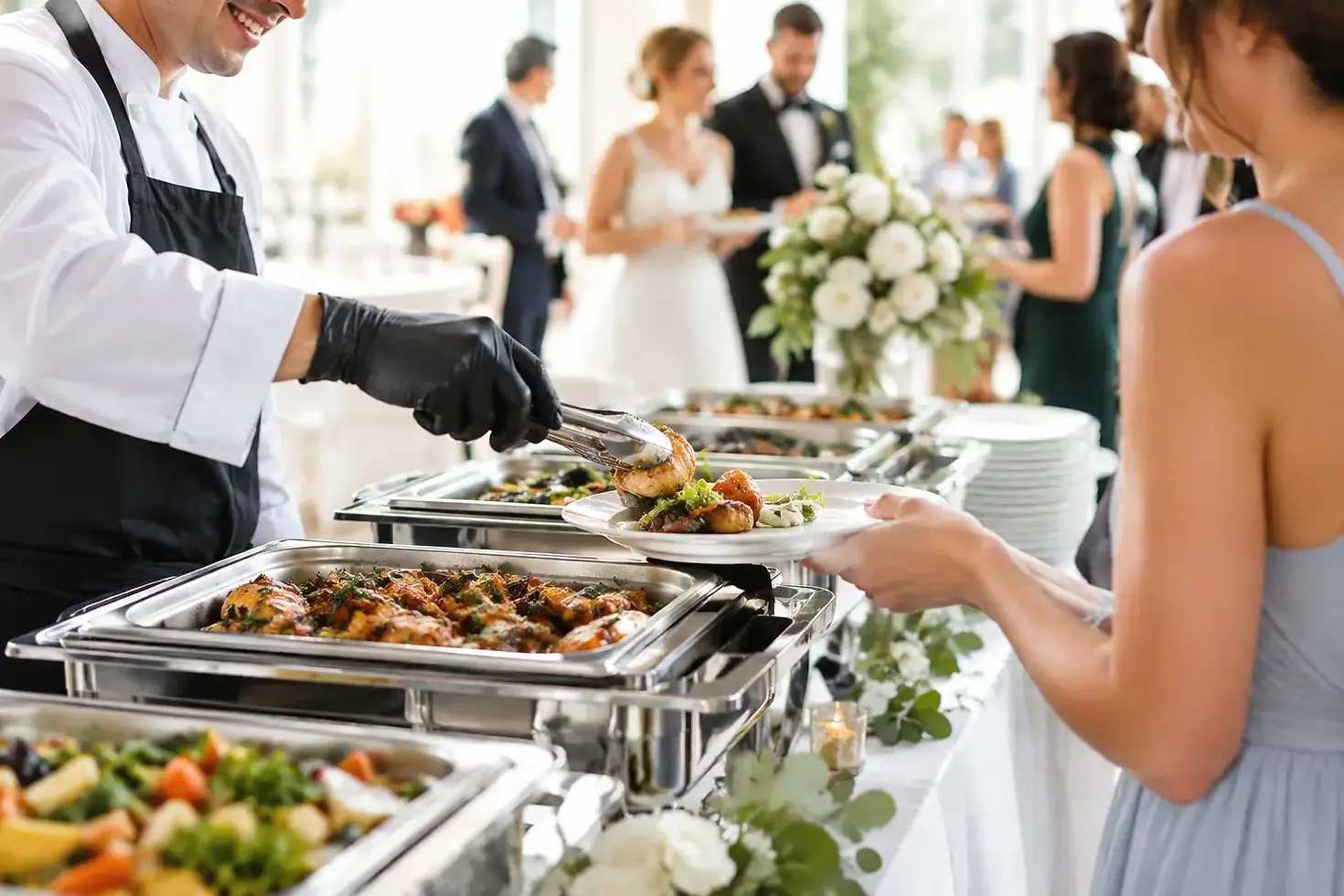
A curated buffet offers more movement and more choice. Done thoughtfully, it should never feel like a cafeteria line. Multiple stations, attentive attendants, generous space between displays, and dishes replenished from the kitchen all make a meaningful difference. This format can work beautifully for a lively crowd, especially where a property offers several gathering areas.
Stations can be equally refined, but they need a purpose beyond variety. A chef-attended carving station, composed seafood display, or pasta finished to order gives guests an experience while limiting congestion. The trade-off is that stations require enough room, equipment, and service staff to keep lines from forming at the same moment.
Build a Menu Around the Guest Experience
A wedding menu should reflect the couple, but it must also serve the room. The dishes that sound most dramatic on paper are not always the wisest choice for a large reception. Consider how a dish holds, how it travels from the kitchen to the table, and how comfortably guests can enjoy it in formal attire.
Start with the season and setting. In Palm Beach and Broward Counties, an outdoor ceremony followed by cocktail hour may call for lighter, cooling selections: chilled seafood, bright citrus, crisp vegetables, and composed bites that are easy to enjoy standing up. For an evening reception, a more substantial menu can still feel balanced when richness is paired with acidity, fresh herbs, and thoughtful vegetable accompaniments.
Cocktail hour deserves particular attention because it carries guests through photographs and the transition from ceremony to reception. Offer enough variety that the spread feels generous, but avoid serving so much that dinner begins with little appetite remaining. A combination of passed hors d'oeuvres and a composed display often creates the right balance. Passed service encourages conversation, while a display gives guests a natural place to gather.
For dinner, a focused menu is usually stronger than an overly broad one. Two entrée choices, perhaps one fish and one meat, plus a considered vegetarian or vegan entrée, are often easier to execute elegantly than a long list of custom selections. Dietary needs should be gathered with RSVPs and clearly communicated to the catering team well before final counts are due. A guest with a serious allergy should never have to negotiate their meal at the table.
Dessert is another timing decision, not just a sweet one. A wedding cake presentation may be central to the evening, while miniature desserts, coffee service, or a late-night bite can sustain the celebration after dancing begins. Consider whether guests will be seated for dessert or circulating. The answer changes both presentation and staffing needs.
Match Service Style to Your Timeline
The reception schedule should be built with the caterer, planner, photographer, and entertainment team in mind. When each partner works from a different timeline, even an excellent menu can feel rushed.
A common issue is placing too many formalities between cocktail hour and dinner. If guests have already been standing for an hour, then wait through a grand entrance, first dance, welcome toast, and several speeches before their first course, the energy in the room can shift for the wrong reasons. In many cases, serving a first course shortly after guests are seated creates a more relaxed opening to dinner.
Speech placement also matters. A short welcome before the first course is natural. Longer toasts may be better timed between courses, once glasses are refreshed and guests have had a chance to settle. A skilled catering team coordinates quietly with the planner and band or DJ so service pauses when attention belongs elsewhere.
Ask your caterer how many minutes they allow for each phase of service. The answer should account for actual guest count, table layout, kitchen distance, and the number of servers assigned. A plated meal for 80 guests and one for 220 guests cannot be planned the same way, even if the menus are identical.
Ask the Venue Questions That Affect the Food
Venues vary widely in their ability to support a polished culinary experience. A dedicated catering kitchen offers one set of possibilities; a private home, tented lawn, or raw waterfront space requires another level of planning. Neither is inherently better, but the operational details should be clear early.
Discuss kitchen access, available refrigeration, electrical capacity, water access, loading routes, parking, elevator use, and the distance from prep space to dining tables. At an estate wedding, the path from a temporary kitchen to the reception area can affect how courses are staged and served. At a venue with strict load-in windows, rentals and kitchen equipment may need to arrive on a carefully coordinated schedule.
Do not overlook furniture and tabletop choices. The size and shape of the plates, the glassware plan, linens, charger plates, and centerpieces all influence usable space at the table. A visually abundant table can become uncomfortable if there is little room for bread, water, wine, and a properly served entrée.
For outdoor celebrations, prepare for heat, wind, and rain without letting contingency planning diminish the aesthetic. Food safety, covered service areas, lighting, flooring, and accessible paths for staff are all part of a well-considered rain plan. Guests should experience the evening as effortless, even when the team behind the scenes has adapted to changing conditions.
Know What Full-Service Catering Includes
When comparing proposals, look beyond the per-person menu price. A thoughtful proposal should clarify culinary staffing, service staff, rentals, bar coordination, setup and breakdown, kitchen equipment, gratuity or service charges, and any venue-specific requirements. If an item is not included, it is better to know early than to discover a gap in the final weeks.
Staffing deserves more than a passing glance. Fine food is only part of refined hospitality. The right number of trained servers allows water and wine to be maintained, tables to be cleared discreetly, dietary meals to be delivered correctly, and guests to receive attention without feeling hovered over. For larger or more intricate celebrations, a captain or event lead is essential to coordinate the service team in real time.
Chef Deanna Corso's nearly two decades at The Boca Raton inform a simple but valuable standard: the guest should notice the hospitality, not the mechanics. That requires preparation, communication, and a service team that understands when to anticipate a need and when to remain unobtrusive.
Give Yourself Room for Good Decisions
Final guest counts, entrée selections, floor plans, and rentals all converge in the weeks before a wedding. Avoid waiting until that period to make foundational choices about service style or menu direction. Early clarity gives your catering team time to source well, plan staffing accurately, and identify practical solutions before they become last-minute compromises.
If your celebration involves a private property, complex logistics, or several vendor partners, a wedding planner can be especially helpful. A catering team that regularly works alongside planners can also recommend a planning professional when the scope of the event calls for one.
The best wedding meals are remembered not only for a particular dish, but for how guests felt while sharing them. When you are ready to shape a reception with thoughtful cuisine, polished service, and a realistic plan for the setting, Simply Foods can help you begin the conversation with confidence.


Comments