
How to Plan Luncheon Catering With Confidence

A luncheon can appear deceptively simple: a midday meal, a beautiful setting, and guests who need to return to work, a meeting, or the rest of their day. Yet knowing how to plan luncheon catering means managing a precise balance of timing, appetite, presentation, and hospitality. The best luncheons feel gracious rather than rushed, with food that is satisfying but appropriate for the hour and service that supports the purpose of the gathering.
Whether you are hosting clients at a private club, celebrating a shower at home, or coordinating a professional gathering at an office or venue, begin with the guest experience. Lunch is rarely just about the meal. It is a pause in the day, and the catering should make that pause feel considered.
Begin With the Purpose and Pace of the Luncheon
Before selecting a menu, define what the luncheon needs to accomplish. A corporate working lunch has different requirements than a bridal shower, memorial reception, charity committee meeting, or milestone birthday. Consider whether guests are expected to network, listen to a presentation, participate in an activity, or simply enjoy one another's company.
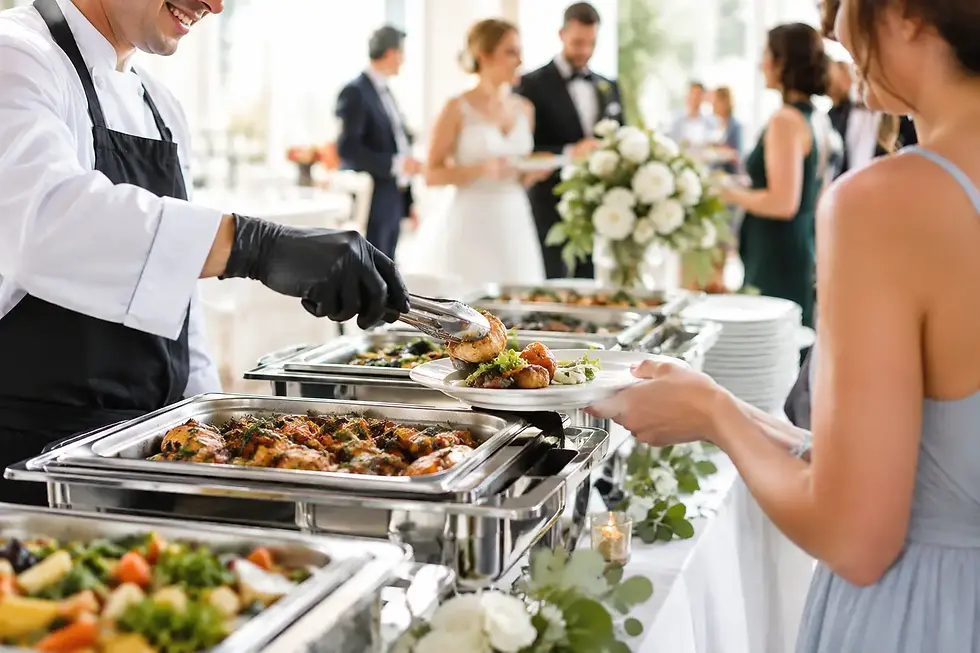
The format should follow that purpose. A plated luncheon provides a polished rhythm for a seated program and keeps service orderly when guests are arriving all at once. A curated buffet encourages conversation and offers guests more choice, though it needs thoughtful placement to prevent a long line. Premium drop-off catering can be an excellent fit for smaller office gatherings and informal meetings when the host has adequate setup space and does not require staffed service.
Timing deserves the same attention. For a 12:00 p.m. invitation, guests should be able to enjoy refreshments shortly after arrival, with the main meal ready to begin within 20 to 30 minutes. If there is a speaker or presentation, build the culinary schedule around it rather than treating food service as an interruption. A well-run luncheon protects the agenda while still allowing guests to eat comfortably.
Confirm the Guest Count Before Building the Menu
A preliminary guest count is useful for early pricing, but the final count shapes nearly every operational decision: portions, staffing, rentals, seating, linens, and beverage quantities. Ask for responses early, then set a clear date for final confirmation with your caterer. For events with busy professionals or out-of-town guests, a small margin for late changes is sensible, but it should be discussed rather than assumed.
Guest composition matters as much as the number. A luncheon for senior executives may favor a composed plated entrée and discreet table service. A multigenerational family gathering may be better suited to a generous buffet with familiar selections alongside more distinctive chef-led dishes. For an outdoor Palm Beach luncheon, heat and humidity also affect menu planning, holding equipment, and the location of beverages and dessert.
Dietary needs should be collected with RSVPs whenever possible. Asking guests to identify vegetarian, vegan, gluten-sensitive, dairy-free, kosher-style, or allergy-related requirements in advance allows the chef to create intentional alternatives. It is far more elegant to serve a properly considered entrée than to improvise a substitute on the day of the event.
How to Plan Luncheon Catering Around the Right Menu
Lunch menus should have contrast, but not excess. A thoughtful meal typically includes a bright first course or salad, a substantial but not overly heavy entrée, composed accompaniments, and a restrained dessert or sweet finish. The goal is for guests to leave satisfied and refreshed, not ready for an afternoon nap.
Seasonality is particularly valuable at midday. Crisp greens, local citrus, fresh herbs, chilled seafood presentations, grilled vegetables, and clean sauces tend to feel appropriate in South Florida's climate. Richer dishes can certainly have a place, especially for a formal indoor event, but balance them with acidity, texture, and lighter sides.
A menu should also be designed for the service style. Some dishes hold beautifully on a buffet; others are at their best when plated and served immediately. Delicate fish, crisp-skinned poultry, and precisely cooked vegetables may call for an on-site chef team and timed service. Braised meats, grain salads, and composed platters can be excellent choices for a more relaxed format. Fine-dining quality outside a restaurant depends on making these decisions before the event, not hoping every dish will perform the same way in every setting.
Chef Deanna Corso's nearly two decades at The Boca Raton inform this kind of planning: restaurant-level cooking requires equal attention to what happens before the plate reaches the guest. Ingredient quality is only one part of the experience. Temperature, portioning, service timing, and presentation all matter.
Do Not Forget the Beverage Plan
At lunch, beverages should feel complete without becoming distracting. Still and sparkling water, coffee, hot tea, and a refreshing nonalcoholic option are a strong foundation. For a celebratory or client-facing occasion, wine, a light cocktail, or a sparkling welcome pour may be appropriate, provided the event timing and guest expectations support it.
If alcohol is served, confirm who is providing bar staff, glassware, ice, permits when applicable, and a suitable bar location. These details affect both guest flow and the visual order of the room.
Evaluate the Venue Before You Commit to a Format
A beautiful room does not always function as a catering kitchen. At private homes, waterfront properties, offices, and certain event venues, the service team may need to work around limited refrigeration, few electrical circuits, narrow access points, elevators, or a long walk from the loading area to the dining space.
Share venue information early, including photos, floor plans, kitchen access, parking instructions, loading restrictions, and the event timeline. A site visit can be particularly valuable for estate gatherings, tented events, and waterfront locations. It allows the catering team to determine where food can be finished, where staff can stage, and how guests will move through the room.
Rentals should support the menu rather than be treated as an afterthought. A plated luncheon may require charger plates, china, flatware, glassware, linens, tables, chairs, and service stations. For a buffet, the presentation tables, serving pieces, menu cards, and floral placement all influence how the meal reads. When an event has several moving parts, a professional event planner can help coordinate rentals, design, venue requirements, and vendor timing. Simply Foods can recommend a planner when that level of support would be helpful.
Build a Timeline That Leaves Room for Hospitality
The event-day schedule should begin well before guests arrive. Caterers need time for delivery, setup, food finishing, table styling, staff briefing, and any bar preparation. Rushing setup is one of the most common reasons an otherwise lovely luncheon feels unsettled at the start.
For the guest-facing portion, plan the progression with intention. Welcome beverages might be available for the first 15 to 20 minutes. If guests are seated, the first course can follow promptly, then the entrée, remarks or a program if needed, dessert, and coffee. A buffet works best when the line opens at a moment guests understand, such as immediately after a brief welcome.
Allow additional time when the venue is large, the group exceeds 40 to 50 guests, or the lunch includes a program. A concise meal for 20 guests may fit comfortably into 75 minutes. A formal plated luncheon with speeches and coffee service may need two hours or more. The right pace depends on the occasion, but it should never leave guests wondering when they will be served.
Set a Budget That Reflects the Full Experience
Menu pricing is only one component of luncheon catering. Staffing, rentals, delivery, setup, service equipment, bar needs, florals, taxes, gratuity, and venue-related fees can all influence the final investment. Ask for a proposal that distinguishes the food and beverage selections from the operational elements required to execute them well.
There are thoughtful ways to prioritize. You may choose a more streamlined entrée in order to invest in attentive staffing, beautiful rentals, or an exceptional dessert presentation. For another event, a chef-attended station may be the feature guests remember most, while tablescape details remain minimal. There is no universal formula. The best allocation depends on the setting, guest expectations, and the role the luncheon plays in the day.
A final planning conversation one to two weeks before the event should confirm the guest count, menu, dietary meals, timeline, floor plan, rentals, contact information, and payment details. This is also the moment to communicate any changes at the venue. Clear final details give the culinary and service teams the ability to focus fully on the guests.
A well-planned luncheon feels effortless because someone has anticipated the details guests never need to see. If you are considering a refined catered luncheon in Palm Beach or Broward County, Simply Foods would be pleased to help shape a menu and service plan that suits the occasion with care.


Comments