
Best Catering Menu Styles for Elevated Events

The best catering menu styles do more than determine what guests eat. They set the pace of the room, influence how people connect, affect the staffing and rental plan, and shape the level of formality guests feel from the moment they arrive. A beautifully composed menu can fall short if its service style does not suit the venue, guest count, or purpose of the occasion.
For an estate dinner, waterfront wedding, executive luncheon, or milestone celebration, the right choice is rarely about following a trend. It is about matching the culinary experience to the event’s rhythm. A chef-led catering team should help you consider the full picture: arrival timing, kitchen access, seating, dietary needs, weather, bar service, and the moments when you want guests to be together rather than waiting in line.
How to Choose Among the Best Catering Menu Styles
Start with the guest experience you want to create. A seated dinner brings focus and ceremony. A refined buffet gives guests choice while keeping the evening relaxed. Passed hors d’oeuvres encourage movement and conversation. Stations create energy and visual interest, particularly when the menu is prepared or finished in front of guests.
Then consider the practical conditions. A private home may have limited kitchen infrastructure, which makes an on-site finishing plan, thoughtful staging, and service timing especially important. A luncheon with a strict agenda may call for a plated entrée or premium drop-off presentation that keeps the program moving. For a wedding, the length of cocktail hour, room transitions, and speeches all affect whether a menu format will feel effortless or overly drawn out.
Chef Deanna Corso’s nearly two decades at The Boca Raton inform the kind of operational thinking that matters here. Fine dining is not only about the plate. It is about having each course arrive at the right temperature, anticipating a guest’s needs before they ask, and allowing the host to remain present rather than managing details behind the scenes.
Plated Dining for Formal, Intentional Gatherings
A multi-course plated dinner is often the strongest choice for weddings, seated fundraisers, anniversary celebrations, and formal corporate events. Guests are seated, courses are served in sequence, and the meal becomes a central part of the occasion rather than a pause between activities.
This format is especially effective when presentation, pacing, and hospitality are priorities. A composed first course, thoughtfully plated entrée, and polished dessert service allow the culinary team to create a restaurant-quality experience in a private venue. It also offers natural structure for toasts, speeches, and special moments, since everyone is seated at the same time.
The trade-off is that plated dining requires more planning. Final entrée selections and dietary accommodations should be managed well before the event, and the room needs a service plan with clear pathways for staff. In some settings, rentals, linens, glassware, and kitchen equipment become just as important as the menu itself. The result can be exceptionally refined, but it depends on precise coordination.
For hosts who want choice without sacrificing formality, a dual-entrée plate or preselected entrée options can work well. The decision should reflect the event’s scale and the guests’ expectations. A seated dinner for 30 at a private residence has different needs than one for 200 in a ballroom.
Curated Buffets That Still Feel Refined
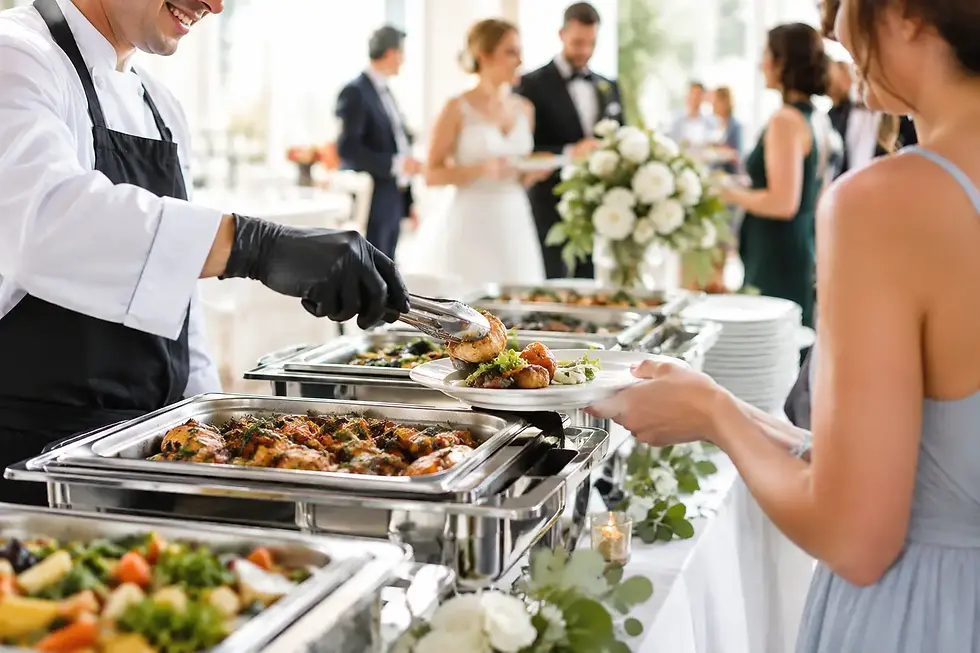
A buffet is not automatically casual. When it is designed with restraint, generous spacing, polished serving pieces, and a thoughtful progression of dishes, it can feel elevated and abundant. It is often an excellent option for rehearsal dinners, holiday gatherings, showers, estate parties, and celebrations where guests will be mingling throughout the evening.
The strength of a curated buffet is flexibility. Guests can select the elements they prefer, portions can feel more personal, and dietary considerations are easier to accommodate without calling attention to individual needs. A menu might include a seasonal salad, two carefully prepared proteins, composed vegetable dishes, a starch with real culinary interest, and desserts presented with the same attention as the savory courses.
A buffet works best when the layout is designed to prevent congestion. One table serving 100 guests can create an unnecessary line and interrupt the atmosphere. Multiple access points, staggered release by table, or chef-attended stations can preserve flow. For outdoor events in Palm Beach and Broward Counties, protecting food quality from heat and planning for wind are equally essential.
Buffets also need enough staffing. While guests serve themselves, attentive service still matters: clearing plates, refreshing beverages, maintaining the presentation, and ensuring every dish remains at its best. The format may be more relaxed than plated dining, but it should never feel unattended.
Stations and Small Plates for Social Energy
Chef-attended stations and small-plate menus suit events built around conversation. Think cocktail-forward receptions, gallery-style gatherings, milestone birthdays, product launches, and wedding cocktail hours that need to carry guests comfortably into the evening.
Stations can bring a sense of theater without becoming distracting. A carving station, fresh pasta presentation, coastal raw bar, or composed taco station can offer variety while giving guests a reason to move through the space. The key is selecting stations that feel cohesive, not simply assembling every appealing idea into one room.
A successful station menu typically balances substantial offerings with lighter bites. If guests will not have a formal dinner afterward, stations must provide enough food and enough seating or cocktail tables for guests to enjoy it comfortably. If the stations are only part of a longer celebration, the menu can be lighter and more exploratory.
Passed hors d’oeuvres are often the essential companion to this style. They welcome guests without forcing them toward a food table immediately and can be timed around arrivals, ceremonies, or photographs. Service staff should circulate consistently, with enough variety to keep the experience interesting while avoiding an overly complicated menu.
Family-Style Service for Warmth and Connection
Family-style dining sits between the ceremony of plated service and the flexibility of a buffet. Large platters and bowls are placed on each table, inviting guests to share and serve one another. For intimate weddings, holiday dinners, and private gatherings where the host wants a warm, generous atmosphere, this format can feel particularly memorable.
It is best suited to menus that hold well and are easy to pass: sliced proteins, seasonal vegetables, salads, grains, pastas, and thoughtfully prepared side dishes. The approach encourages conversation, but it also requires generous table space. Overcrowded tables make passing platters cumbersome and diminish the visual effect.
Family style is not always the ideal solution for a highly formal event or a group with many complex dietary requirements. Individual accommodations can still be handled beautifully, but they need to be planned in advance. It also requires careful portioning so every table receives the same abundance and guests who arrive later are not left with limited choices.
Premium Drop-Off Catering When Timing Is Tight
Not every elevated event needs full-service staff. Premium drop-off catering is a practical, polished option for board meetings, office luncheons, casual home entertaining, memorial receptions, and smaller gatherings with a more independent format.
The distinction is in the details. Food should arrive organized, clearly labeled, and presented in a way that makes serving intuitive. A strong drop-off menu favors dishes that travel well and retain their quality, rather than forcing a restaurant-style dish into a format that does not support it. Thoughtful packaging, reheating guidance when needed, serving utensils, and a realistic delivery timeline protect the host’s experience.
For a business luncheon, individual composed meals may be more efficient than a shared buffet. For a home gathering, an elegant grazing display, salads, sandwiches, or warm entrée platters may better support an open-house rhythm. The menu should fit the occasion, not ask the occasion to accommodate the menu.
Let the Venue and Schedule Lead the Decision
Before finalizing a menu style, walk through the event from a guest’s perspective. Where will they arrive? Will they have a drink in hand? Is there shade outdoors? How long will they stand before dinner? When are speeches, presentations, or dancing expected to begin? These questions reveal more than a list of favorite dishes can.
A skilled caterer can also identify logistics that are easy to overlook, including power access, service entrances, elevator timing, parking, rental coordination, and a suitable area for fresh-on-site preparation. When a wedding or large social event involves several moving pieces, a planner can be a valuable partner in aligning catering, florals, rentals, entertainment, and the venue schedule.
The most memorable menu style is the one guests barely have to think about. Food arrives beautifully, the service feels gracious, and the evening moves with ease. If you are considering an elevated gathering, Simply Foods can help you weigh the format, menu, and event flow with the same care given to the cuisine.


Comments