How to Plan a Funeral Reception with Care

A funeral reception is often the first quiet moment a family has to be together after a service. Guests may arrive carrying flowers, memories, and a desire to offer comfort, while the immediate family may be managing far more than they expected. Knowing how to plan a funeral reception means creating a welcoming setting with enough structure to feel cared for, without making the gathering feel formal or demanding.
The most successful receptions are not defined by elaborate details. They are defined by good timing, comfortable hospitality, food that suits the hour, and a setting where people can stay for a few minutes or several hours without feeling rushed. Thoughtful planning allows the family to be present rather than answer questions about coffee, seating, or where the serving utensils are.
Start With the Purpose and Timing of the Gathering
Before choosing a menu or venue, decide what the reception needs to provide. Some families want a brief gathering immediately following the service, usually with light lunch fare, coffee, and sweets. Others prefer an open-house style reception later in the day, allowing guests to come and go. A more intimate meal may be appropriate for close family and friends after larger services have ended.
The service time should guide nearly every catering decision. A morning memorial followed by a reception at 11:30 a.m. calls for a substantial brunch or luncheon. If guests will arrive after 4:00 p.m., they may reasonably expect heartier appetizers or dinner. The difficult middle ground is a reception that falls during a meal period but offers only desserts and beverages. If the gathering overlaps with lunch or dinner, plan enough food to make guests comfortable.
It also helps to set a realistic timeframe. Two hours is often sufficient for a church hall, private club, or dedicated venue. At a private home or estate, an open-ended reception can feel more natural, though the host should still establish an arrival window with the caterer so service, rentals, and staffing are properly planned.
Choose a Venue That Reduces Pressure on the Family
Convenience matters more than grandeur. A reception space close to the service location generally allows more guests to attend and keeps the day moving gently. For Palm Beach County families, this may mean a private residence, a country club, a community room, a restaurant private dining room, or a venue near the place of worship.
A home can feel especially personal, but it requires an honest assessment of logistics. Consider parking, accessible entrances, restroom capacity, kitchen workspace, refrigeration, and whether the home can comfortably hold the expected number of guests. A professional catering team can work beautifully in a private residence, but advance knowledge of the layout, power access, and service area prevents last-minute adjustments.
If the family wants to host at home but does not want guests throughout the house, create a clear reception footprint. The main gathering spaces, outdoor terrace, and restrooms can be opened while private rooms remain closed. In warm weather, shaded outdoor seating and dependable climate control are especially important. Comfort is a form of hospitality.
Build the Guest Count With Flexibility
Funeral attendance is less predictable than attendance at most planned events. Begin with the immediate family’s list, then consider colleagues, neighbors, members of a congregation, and friends of the deceased. If the reception is open to everyone attending the service, ask the funeral home, clergy member, or venue coordinator for a realistic estimate based on the expected service attendance.
For an open reception, caterers typically plan for a percentage of service guests rather than every attendee. The right estimate depends on distance between locations, the time of day, whether the invitation is broadly communicated, and local family customs. A reception directly after the service may attract more guests than one scheduled later.
Give your caterer the best estimate available, then discuss a reasonable buffer. The goal is not excess for its own sake. It is to avoid the distress of running short on food, coffee, or seating when people have gathered to pay their respects.
Select a Menu That Feels Generous and Easy to Enjoy
Food at a funeral reception should be familiar enough to be comforting, yet carefully prepared and well presented. This is not usually the moment for a highly interactive dining experience, complicated stations, or a menu that requires guests to balance plates and cutlery while greeting loved ones.
For a luncheon reception, a refined buffet often works well. A composed salad, seasonal vegetables, a comforting starch, and two approachable entrées offer variety without creating an overly large spread. Roasted chicken, salmon, tenderloin, pasta, and vegetable-forward entrées can all be appropriate depending on the family’s preferences and dietary needs.
Passed hors d'oeuvres can be elegant for a smaller, more formal gathering, but they may not be sufficient if guests arrive hungry after a midday service. In that case, pair them with a chef-attended or buffet-style offering that gives guests a complete plate.
For an afternoon reception, thoughtful small bites may be enough: tea sandwiches, savory pastries, fruit, cheese, petite desserts, and quality coffee. A family recipe or the loved one’s favorite dessert can add a personal note when it feels right. Keep that detail subtle. The reception should honor the person without placing the family in the position of explaining every element.
Chef Deanna Corso’s nearly two decades at The Boca Raton inform a practical hospitality principle that applies especially well here: guests remember whether they were cared for. Temperature, replenishment, clear dietary labels, and attentive service are often more meaningful than an elaborate menu.
Account for Dietary Needs Quietly
Include at least one substantial vegetarian option and consider common needs such as gluten-free, dairy-free, and nut-free selections. These accommodations do not need to be announced or segregated in a way that draws attention. Clear, discreet labeling lets guests choose with confidence.
If the family is unsure of specific dietary requirements, a well-rounded menu with naturally accommodating dishes is usually the most graceful solution. Seasonal salads, roasted vegetables, rice or potato dishes, and a composed vegetarian entrée can serve everyone well.
Plan the Room for Conversation, Not Ceremony
A funeral reception is a social gathering, but it should not feel like a party. Soft background music may be appropriate in a private setting, though silence can be equally comfortable. Avoid a packed seating plan or formal place cards unless the event is a seated meal for a small, defined group.
Provide a mixture of seating: dining tables for those who need a place to settle, a few lounge-style areas for quieter conversations, and standing-height tables for guests who expect to visit briefly. Older guests and immediate family members should always have easy access to chairs.
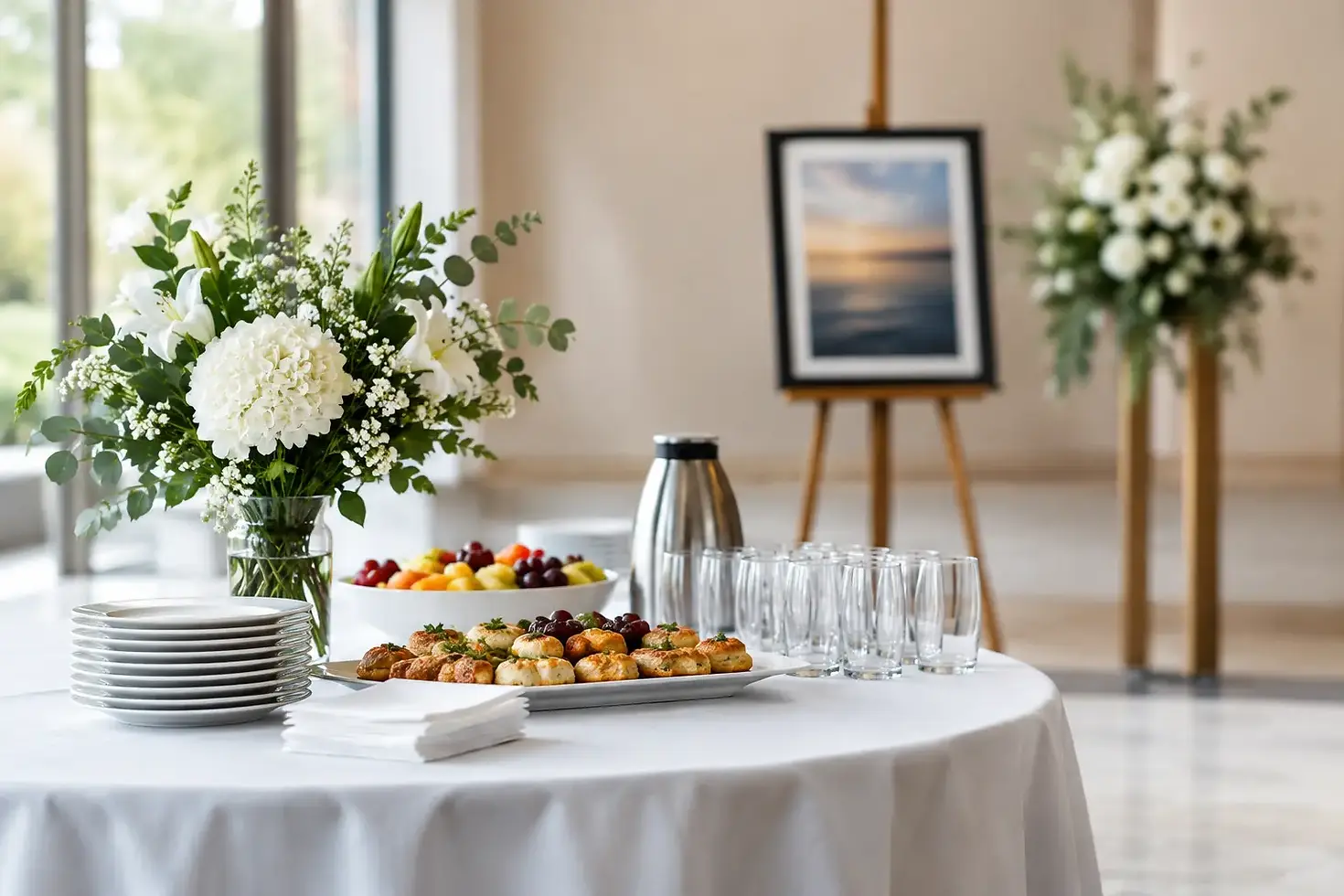
If photographs, a guest book, or memorial items are included, place them away from the food line. This gives guests room to pause without blocking service. A framed photo, a simple floral arrangement, and a discreet place for cards are often enough.
Decide What Level of Service Will Bring Relief
The service format should match the venue, guest count, and family’s capacity. Premium drop-off catering can be appropriate for a smaller gathering at home when a relative or family friend is comfortable overseeing setup and replenishment. It offers quality food with less staffing and can be a sensible choice when the reception is simple.
For a larger reception, full-service catering is often the calmer option. Professional staff can receive rentals, set the tables, maintain the buffet, circulate beverages, clear plates, and restore the space afterward. That level of support is particularly valuable when family members need to greet guests rather than manage the event.
A few details are worth confirming with any catering partner before the day:
Who will be the single point of contact if the family cannot take calls?
What time will the team arrive for setup, and when will breakdown be complete?
Are tables, linens, china, glassware, coffee service, and bar items included or separately arranged?
How will food be replenished and dietary selections identified?
What is the plan if attendance is higher than expected?
These questions are practical, not impersonal. Clear answers make room for the family to focus on one another.
Keep Beverages Considered and Appropriate
Coffee, tea, still water, and sparkling water are appropriate at nearly every reception. For a daytime gathering, fresh lemonade, iced tea, or a seasonal nonalcoholic beverage adds a polished touch without overcomplicating the offering.
Whether to serve alcohol is a family decision. Wine and beer may feel fitting for an evening reception or a gathering at a private club, while some families prefer no alcohol at all. If alcohol is served, it should be modestly presented, professionally managed, and accompanied by substantial food and nonalcoholic choices.
Share Information Clearly and Let Others Help
The reception details should be communicated simply: location, start time, and whether the gathering is immediately following the service. If it is invitation-only or intended for close family, say so gently. A funeral director, clergy member, family representative, or event planner can help distribute information and field logistical questions.
Choose one person outside the immediate family to make decisions on the day. This person can approve minor changes, direct vendors, and answer practical questions. If the reception includes complex rentals, transportation, or a large guest count, working with an experienced event planner can be especially helpful. Simply Foods can also recommend planning support when appropriate.
The reception does not need to be perfect to be meaningful. It simply needs to offer warmth, nourishment, and room for people to remember someone together. If you are planning a funeral reception in Palm Beach or Broward County, Simply Foods can help you shape a thoughtful menu and service plan with the quiet precision the occasion deserves.


Comments