
Fresh On Site Catering for Exceptional Events

A passed hors d’oeuvre should arrive warm, crisp, and precisely composed. A plated entrée should meet the guest at its intended temperature, not wait under a cover while the room settles. That distinction is the heart of fresh on site catering: food is finished, cooked, and presented at the event rather than simply transported from a commissary kitchen.
For hosts planning a wedding, estate celebration, corporate dinner, or intimate gathering, this approach offers more than better flavor. It gives the culinary team the ability to respond to the actual rhythm of the occasion - a delayed ceremony, sunset photographs running long, a toast that becomes a conversation. When food is prepared with the event in view, service can feel measured and natural rather than rushed around a delivery schedule.
What Fresh On Site Catering Actually Means
Fresh on site catering does not necessarily mean every ingredient arrives raw and every task begins from scratch at the venue. Thoughtful advance preparation is essential to quality and food safety. Stocks may be made ahead, vegetables cleaned and prepared, sauces developed, and proteins carefully portioned before the event day.
The difference is in the final cooking and finishing. Proteins can be roasted, grilled, or seared close to service. Sauces are warmed and adjusted at the appropriate moment. Garnishes stay bright, crisp elements remain crisp, and plates are assembled with the care they would receive in a fine-dining kitchen.
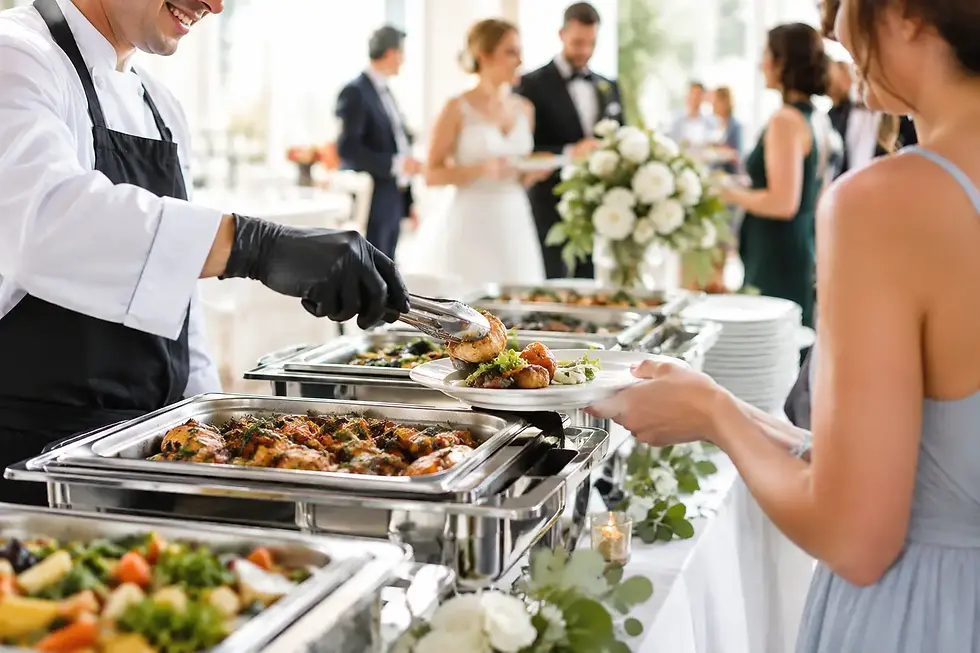
This matters especially with menus that rely on contrast and temperature. A tender filet, pan-seared local fish, crisp vegetable accompaniment, or delicate dessert is at its best when the final steps happen shortly before it is served. The same principle applies to a refined buffet. Hot dishes can be replenished in smaller batches, and cold presentations can be refreshed throughout the event instead of placed out all at once.
Why the Venue Changes the Food
A restaurant kitchen is designed for service. A private residence, waterfront lawn, ballroom, or country club may not be. Successful on-site catering begins with an honest assessment of the venue long before menus are finalized.
At a private home, the kitchen can be valuable for finishing touches, but it is rarely sufficient for a full guest count on its own. The existing oven may be needed for a host’s personal items, counter space can be limited, and household refrigeration is not intended to hold a large event’s mise en place. A professional caterer plans a separate working footprint, often with prep tables, insulated equipment, portable cooking capability, sanitation stations, and a clear route for staff movement.
Waterfront properties require another layer of planning. Wind affects flames, linens, menus, and even the placement of serving equipment. Outdoor temperatures influence how long chilled food can remain on display and how quickly hot food must be replenished. Access can be equally important: a beautiful home with a narrow side gate or limited parking needs a more deliberate load-in plan than a venue with a dedicated service entrance.
Chef Deanna Corso’s nearly two decades at The Boca Raton informed the kind of planning that separates an attractive menu from a well-executed event. Resort-level service depends on anticipating space, timing, equipment, and staffing needs before guests arrive. For catered events, that preparation is what allows the food and hospitality to appear effortless.
The Culinary Advantages Guests Notice
Guests may not ask whether the menu was finished on site, but they recognize the results. The first bite has more vibrancy. Aromas carry through the room at the right moment. A carving station feels active and generous rather than static, while a plated course reaches the table with a sense of occasion.
Fresh preparation also gives a chef more control over timing. For example, risotto can be finished to the right texture rather than held until it loses its character. Seasonal vegetables can be roasted in stages, preserving color and structure. A passed canapé with a warm component can be assembled close to service, keeping the experience intentional from the first tray to the last.
There is also a presentation benefit. Fresh herbs do not wilt as quickly. Crispy garnishes retain their texture. Sauces can be applied with restraint instead of being absorbed during transport. These details are subtle individually, yet together they create the polished impression guests associate with a fine-dining meal.
When It Is the Right Choice
On-site cooking is especially valuable for celebrations where the meal is central to the guest experience. Weddings with plated dinners, milestone birthdays, anniversary parties, estate gatherings, and executive dinners all benefit from the control it provides. It is equally well suited to refined receptions where stations, passed bites, and a chef-attended presentation are meant to create energy in the room.
That said, it is not the only appropriate format. Premium drop-off catering can be an excellent choice for a business luncheon, a daytime shower, or a smaller gathering where the host wants exceptional food without full staffing and equipment. A composed cold lunch, beautiful grazing display, or menu designed to hold well may be more practical than building an active event kitchen.
The best format depends on guest count, venue access, budget, desired level of service, and how much of the event centers on dining. A candid conversation about those priorities should happen early. It prevents a host from paying for a format that does not serve the occasion, or selecting a simplified format for an event that truly calls for more hands-on execution.
Menu Design for an On-Site Kitchen
A strong catering menu is not a restaurant menu copied onto an event proposal. It is built around what can be executed consistently for the number of guests, the season, the setting, and the service style.
For a plated dinner, that may mean choosing an entrée whose resting time and final sauce application can be managed precisely. For a buffet, it may mean designing a balance of dishes that hold beautifully alongside items that are replenished in small, freshly finished batches. For stations, it means selecting foods that invite interaction without creating a line that interrupts the evening.
Dietary needs should be incorporated from the beginning, not treated as a last-minute exception. A thoughtful chef can create vegetarian, vegan, gluten-conscious, or allergen-aware selections that belong naturally within the menu’s overall style. Clear guest information is still essential, particularly for serious allergies, because event kitchens must manage ingredients, surfaces, and service carefully.
Seasonality adds another advantage. In South Florida, a menu for a warm outdoor evening should feel different from one planned for a winter estate dinner. Lighter preparations, bright citrus, chilled elements, and careful temperature management often suit warmer months, while richer sauces and more substantial accompaniments can be especially welcome when the weather is cooler.
Questions to Settle Before Your Tasting
Before meeting with a caterer, it helps to have a working guest count, event timeline, venue address, and a sense of whether guests will be seated, circulating, or both. If the event is at home, share photographs of the kitchen, outdoor areas, access points, and parking. These details make it possible to recommend the right equipment and service plan rather than making assumptions.
You will also want to discuss rentals early. Tableware, glassware, service pieces, cooking equipment, lighting, tents, and power access each influence the final experience. A caterer can coordinate these elements and work closely with your planner, or recommend an event planner when the gathering has multiple moving parts.
Ask how the team plans for the unexpected. Florida weather, traffic, elevator access, power limitations, and timeline changes are ordinary realities of event work. The value of an experienced culinary and service team is not that nothing changes. It is that changes are handled quietly, with guest comfort and food quality protected.
The Standard Is More Than a Warm Plate
Fresh on-site preparation is ultimately a commitment to care. It asks more of the culinary team: more planning, more equipment, more coordination, and more attention throughout the event. In return, it creates food that feels alive in the moment and hospitality that supports the host without demanding attention.
If you are planning a gathering where the meal should feel as considered as the setting, Simply Foods can help you determine whether a chef-led on-site experience, a refined buffet, or premium drop-off service is the right fit. A well-planned menu begins with the way you want your guests to feel when they take their first bite.


Comments