
Private Catering for Events That Feel Effortless

A beautiful private event rarely feels complicated to the guest. Cocktails arrive at the right temperature, passed hors d’oeuvres circulate without interrupting conversation, and dinner begins when the room is ready for it. That ease is the result of thoughtful private catering: a culinary team that plans not only what will be served, but how the entire experience will move.
For a dinner at home, a waterfront celebration, a memorial reception, or a company luncheon, the food is only one part of the decision. The right caterer considers kitchen access, guest flow, staffing, rentals, timing, dietary needs, and the character of the venue well before the first plate leaves the kitchen. This is where fine-dining precision becomes especially valuable outside a restaurant.
What Private Catering Should Include
Private catering can be as simple as premium drop-off service or as involved as a fully staffed, multi-course dinner. The appropriate format depends on the occasion, the guest count, the property, and the level of hosting you want to take on yourself.
For an intimate gathering, chef-prepared dishes delivered ready to serve may be the most practical choice. It preserves a relaxed atmosphere while giving hosts restaurant-quality food without spending the evening in the kitchen. For a larger party, full-service catering allows the team to manage setup, service, replenishment, clearing, and often coordination with rental and bar partners.
A well-developed proposal should clarify more than a menu and price per guest. It should establish what is included in service, which rentals may be needed, when the team will arrive, whether the venue has adequate power and prep space, and how food will be presented. These details protect the guest experience and prevent last-minute compromises.
Service style shapes the room
The service style should support the way you want people to interact. A plated dinner offers structure and visual refinement, making it well suited to formal celebrations, milestone occasions, and certain wedding receptions. It also requires accurate timing, adequate staffing, and a floor plan that allows servers to move comfortably.
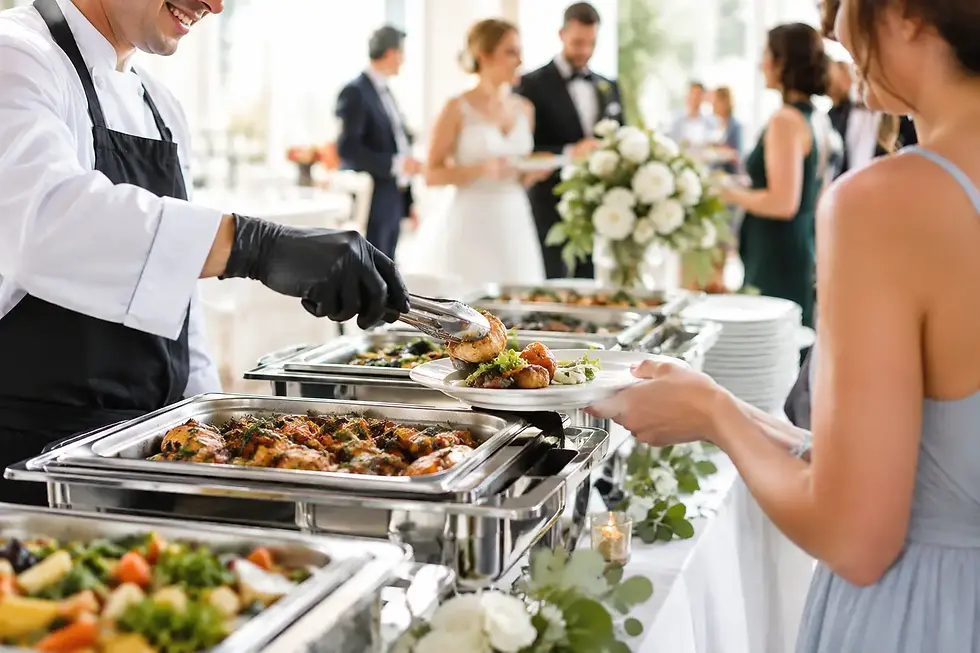
A curated buffet can feel equally elevated when it is designed with intention. It is often a strong choice for estate gatherings, corporate events, and receptions where guests value flexibility. The difference between an ordinary buffet and a polished one is found in presentation, temperature control, replenishment, and a menu that remains appealing through the event rather than only at the first pass.
Cocktail-style service encourages movement and conversation. Passed small plates, a composed display, and a few substantial stations can create a lively evening without assigning guests to a table. The trade-off is that guests still need enough seating, surfaces for drinks, and a sufficient amount of food to feel genuinely hosted.
Begin With the Guest Experience, Not the Menu
Many hosts begin by asking what should be served. A more useful first question is how they want guests to feel. Is this a formal evening with a seated meal? A gracious afternoon shower where guests mingle in the garden? A funeral reception where food should be comforting, unobtrusive, and readily available as people arrive at different times?
Once that is clear, the menu becomes easier to shape. A celebratory waterfront dinner may call for bright seafood, seasonal produce, and a plated entrée with a clean, elegant finish. A business luncheon may benefit from a menu that is satisfying but not heavy, with service paced to respect the meeting agenda. At a family gathering, familiar flavors presented with more finesse can feel more welcoming than a menu built around novelty.
Dietary accommodations deserve the same consideration as the primary menu. Ask guests about allergies and dietary restrictions early, then share that information with the caterer before selections are finalized. A thoughtful chef will build appropriate options into the menu rather than treating them as an afterthought on event day.
Chef Deanna Corso’s nearly two decades at The Boca Raton inform this approach: luxury hospitality is not simply about elaborate ingredients. It is about anticipating needs, maintaining standards under pressure, and making every guest feel considered.
Private Catering at Home Requires a Site Plan
Private homes offer warmth and personal character, but they also require a realistic operational review. A residential kitchen may be perfect for finishing a small dinner, yet unsuitable for preparing and staging a reception for 75 guests. Outdoor events introduce their own variables, including weather protection, lighting, access paths, power, and safe food holding.
Before committing to a service format, discuss the property with your catering team. Photos, a floor plan, or a brief walkthrough can reveal whether a tented prep area, additional refrigeration, generators, or off-site finishing will be necessary. This is not unnecessary formality. It is what allows the team to preserve food quality and provide composed service without disrupting your home.
Arrival and departure deserve attention as well. At an estate or waterfront property, vendors may need designated parking, a loading route, and clear instructions for gate access. If guests will be using the same driveway during arrivals, schedule delivery windows so the two flows do not compete. These modest decisions have an outsized effect on how calm the event feels.
Do not underestimate the rental conversation
The menu and the table setting should work together. Plated dining may require charger plates, dinnerware, glassware, flatware, linens, tables, chairs, and coordinated service pieces. Even an elegant cocktail reception needs enough cocktail tables, bar glassware, and discreet stations for napkins and waste.
A good caterer can help identify what is needed based on the selected service style. When appropriate, Simply Foods also works alongside wedding and event planners and can recommend a planner for events that need broader design, logistics, or vendor coordination. The goal is not to add complexity. It is to assign each responsibility clearly before event week.
Build a Timeline That Protects the Food
Food quality depends on timing. Crisp items soften, hot dishes cool, and a carefully plated course loses its appeal if guests are delayed for an unexpected speech. Your event timeline should give the catering team enough room to execute without making the evening feel rigid.
For a cocktail reception, allow guests time to arrive before the first substantial food service begins. For a seated meal, decide in advance when guests will be invited to the table, when speeches will happen, and whether dessert follows immediately or after a pause. A wedding reception may need a different rhythm from a corporate dinner, but both benefit from a single, shared timeline among the host, planner, venue, caterer, photographer, and entertainment team.
It also helps to name one point person who can make small decisions on the day. The host should not be asked where to place a station or whether to begin service while greeting guests. An experienced event captain can manage much of this, but clear direction in advance keeps the hospitality focused where it belongs.
Questions Worth Asking Before You Book
The best catering conversations are specific. Ask whether the proposed menu is prepared on site, where food will be finished, and how the team handles dietary restrictions. Confirm the staffing recommendation, the expected service window, and what happens if the guest count changes close to the event.
You should also ask about the venue’s practical limitations. Are there stairs, tight access points, parking restrictions, outdoor exposure, or rules around open flame? Does the property provide an adequate prep kitchen, or should the caterer plan for a mobile working area? A candid discussion early on leads to a more accurate proposal and a better result.
Price naturally matters, but comparing catering proposals solely by the per-person figure can be misleading. One proposal may include staffing, equipment, setup, and service ware, while another accounts only for food. Look at the full scope of what is being delivered and the level of responsibility the team is assuming.
Make Room for the Host to Be a Guest
The strongest private events feel personal without requiring the host to manage every detail. Choose a menu you are excited to share, give your catering team a clear sense of the occasion, and let the service plan reflect the way your guests will actually gather.
Whether you are planning an intimate dinner, a polished corporate luncheon, or a meaningful family reception in Palm Beach or Broward County, a thoughtful planning conversation can make the decisions ahead feel much simpler. Contact Simply Foods to discuss the setting, guest experience, and service style that will best suit your event.


Comments